Targeted to Intermediate English (B1+) speakers.Read more
This is the standard requirement for most courses. Participants at this level can participate actively in discussions and manage everyday and professional situations. If they are unsure about their English level, they can test it here or explore our courses facilitated in Basic English.
Cross-Curricular.Read more
The listed audiences are those for whom the course is especially recommended, but courses are not exclusive to them and are open to everyone. In fact, most of our workshops are built around the collective sharing of participants’ experiences and having a variety of profiles enriches the learning process and is highly encouraged!
Description
Schools are usually seen as places where cultural heritage is taught, yet they can be recognized as cultural heritage themselves.
Many schools across Europe have historical buildings and preserve collections of photographs, notebooks, teachers’ journals, textbooks, magazines, objects, oral memories and everyday classroom stories that can become valuable sources for understanding the past and connecting it with the present.
But even when school buildings are relatively recent, every school can become a living archive by documenting community memories, collecting stories, preserving relevant objects and recording contemporary educational experiences for future generations.
This material constitutes a precious yet often overlooked resource for education.
This course is intended to help teachers, school leaders and school staff explore school memories as a common heritage to interpret, share and use as an educational tool.
Furthermore, its aim is to help children reflect on the history of their school, feel part of a community of learners that unites past and future, appreciate their school as a place of intergenerational exchange, and consider the role of education in their lives and in the life of the community.
Participants will discover the diversity of European approaches to school memories, while learning how to identify, interpret and use a wide range of materials.
They will explore how school heritage can enrich the teaching of humanities, arts, citizenship, language learning and even STEM subjects, by turning students into researchers, curators, storytellers and communicators.
The course also addresses schools that do not have historical collections. In these cases, participants will learn how to create “living archives” by documenting contemporary school life, collecting community memories, recording interviews, preserving meaningful objects and building digital collections for future generations.
Project-Based Learning will be presented as a practical methodology for working with school archives.
Participants will have the chance to design authentic learning experiences rooted in their school’s heritage and will be able to develop interdisciplinary projects that transform schools into living museums, where students curate exhibitions, create digital collections, podcasts and storytelling projects, organize public events, and communicate their findings to families, local communities and European audiences.
By the end of the course, participants will be able to successfully develop a school heritage project that can be adapted to their own context.
The course will also encourage them to reflect on the diversity of school archive traditions, heritage policies and educational practices across Europe, fostering the exchange of ideas and inspiring innovative approaches to preserving, enhancing and teaching schools as places of cultural heritage.
What is included
Learning outcomes
The course will help participants to:
- Recognize schools as cultural heritage sites and living archives;
- Understand the educational value of school archives and community memories;
- Compare European approaches to school archives and heritage preservation;
- Identify and interpret different types of school archive materials, such as photographs, notebooks, journals, textbooks, magazines and objects;
- Use school archives as learning resources across subjects;
- Create living archives documenting contemporary school experiences and local communities;
- Design digital archives, online exhibitions and storytelling projects;
- Build digital archives to share school heritage online;
- Apply Project-Based Learning (PBL) to heritage education;
- Involve students as researchers, curators, communicators and heritage creators;
- Design school heritage projects and exhibitions engaging communities.
Tentative schedule
Day 1 – Introduction to the course
- Introduction to the course and the Academy;
- Introduction to the host city and the week’s cultural activities;
- Icebreaker activities;
- Presentations of the participants’ schools and institutions.
School as cultural heritage sites: European perspectives and policies
- Schools as places where cultural heritage is taught and preserved;
- School buildings, objects, documents and memories as heritage resources;
- Introduction to European perspectives on school archives and heritage policies;
- Hands-on Session: analyzing how European schools present their heritage online;
- European School Archives: national policies and best practices;
- Group reflection: what heritage exists in participants’ schools?
Day 2 – Teaching with school archives
- Hands-on session: mapping Europe’s oldest school building;
- From local school memories to European heritage: a look at Europeana;
- Types of school archive materials: journals, photographs, notebooks, textbooks, magazines and objects;
- Workshop: using school archives across subjects, from humanities to STEM;
- Designing questions and tasks based on real or sample archive materials.
Day 3 – Creating living and digital archives
- What to do when a school has no historical archive;
- Living archives: documenting today’s school life for future generations;
- Collecting oral histories, community memories, photographs, objects and student-produced materials;
- Connecting school heritage with local communities;
- Designing simple digital archives for school websites or online platforms;
- Workshop: planning a new school archive collection or digital storytelling project.
Day 4 – Project-based learning with school archives
- Creating value from school heritage: communication, creativity and social entrepreneurship;
- Introduction to project-based learning (PBL);
- PBL for Heritage Education;
- Hands-on session: designing driving questions for heritage-based learning projects.
Day 5 – Creating school exhibitions
- From archives to exhibitions: heritage communication;
- Sharing school heritage through digital storytelling;
- Workshop: creating online exhibitions for school websites;
- Course evaluation: round-up of acquired competencies, feedback, and discussions;
- Awarding of the course Certificate of Attendance.
Day 6 – Structured cultural activities
- Structured cultural activity(ies) according to the hosting location;
- Learning journal: individual written reflection on the course experience;
- Course reflection: self-reflection and review of course materials and resources.
🏛️ Festival included
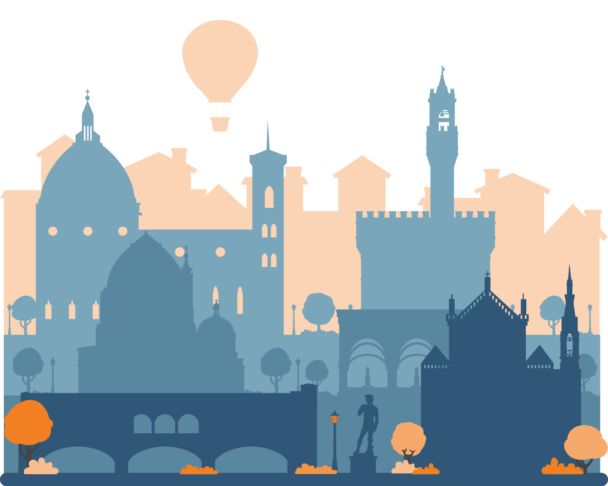
By taking part in this course, you’ll also get free access to the Cultural Heritage in Education Festival in Florence on 18-19 March 2027.
Download or share
Add to favouritesGet weekly recaps on confirmed sessions!