
Targeted to Intermediate English (B1+) speakers.Read more
This is the standard requirement for most courses. Participants at this level can participate actively in discussions and manage everyday and professional situations. If they are unsure about their English level, they can test it here or explore our courses facilitated in Basic English.
Cross-Curricular.Read more
The listed audiences are those for whom the course is especially recommended, but courses are not exclusive to them and are open to everyone. In fact, most of our workshops are built around the collective sharing of participants’ experiences and having a variety of profiles enriches the learning process and is highly encouraged!
Description
Do you find that textbooks and online learning sometimes fail to excite your students?
Research suggests that up to 95% of our lifelong learning happens outside the classroom through “free-choice” experiences like hobbies and museum visits.
Museums and cultural spaces in this sense offer powerful opportunities for learning, curiosity, and discovery.
Yet too often, school visits remain disconnected from classroom learning, becoming passive experiences rather than meaningful educational moments.
This course explores how museum-based learning can help teachers create more engaging, inquiry-driven, and memorable learning experiences both inside and outside the classroom.
Taking place in the historic city of Krakow, during the course participants will explore how these informal spaces can transform their teaching.
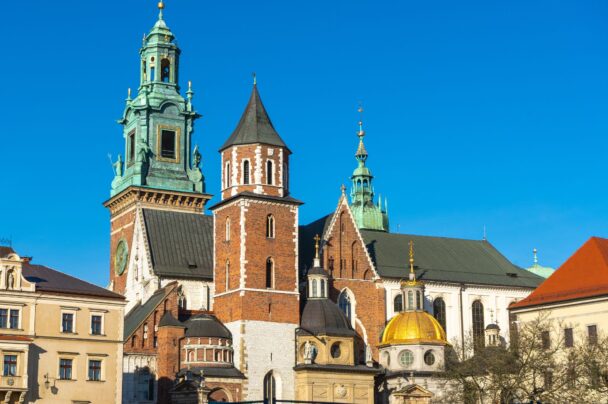
Using the legendary Wawel Royal Castle as a living learning laboratory, participants will discover how museums, objects, and cultural heritage can become tools for critical thinking, creativity, observation, and active participation across subjects and age groups.
Exploring this historical space as both teachers and learners, they’ll discover how to turn a simple school excursion into a focused journey of discovery.
Most importantly, we will also practice “Collections-Based Learning,” showing you how to bring museum objects — and the curiosity they create — directly into their educational contexts.
Combining workshops, collaborative activities, museum exploration, and reflective discussion, particular attention will also be given to the concept of the “Focused Field Trip”: a structured approach that transforms excursions into active learning experiences through preparation, guided observation, and post-visit reflection.
This way, educators will have the chance to examine how informal learning environments can support motivation, participation, and long-term learning.
By connecting with Krakow’s rich heritage, participants will develop a practical toolkit of strategies to make their lessons more inclusive, active, and memorable, no matter what subject they teach or where they are teaching.
They will feel more confident using museums, objects, and cultural heritage as powerful resources for curiosity-driven and experiential learning.
What is included
Learning outcomes
The course will help participants to:
- Understand the basic principles of museum pedagogy and informal learning;
- Discover principles of the “95% Solution” and learn how to apply museum-based learning strategies to their own teaching context;
- Learn how to use objects and “collections-based” strategies to make academic content more accessible for mixed-ability groups and students with special needs;
- Master the “Focused Field Trip” using a specific plan that ensures students stay engaged and learn effectively;
- Experience Learning by Doing to see how history, art, and science “come alive,” while reflecting on the benefits and challenges of this method;
- Reflect on how cultural heritage and informal learning environments can enrich teaching across subjects;
- Internalize specific teaching protocols and vocabulary that make it possible to bring the museum experience back into their regular classroom.
Tentative schedule
Day 1 – Introduction to the course
- Introduction to the course and the Academy;
- Introduction to the host city and the week’s cultural activities;
- Icebreaker activities;
- Presentations of the participants’ schools and institutions;
- Working with museum objects: how to create a collection using real artifacts in a classroom;
- Introduction to the “95% Solution”: why museum-based learning works so well both in and out of the classroom;
- Generating curiosity: practical activities that help students ask deep questions when looking at objects or visiting museums.
Day 2 – Basics of museum-based learning
- Research-based strategies: practicing “Learning by Doing” using real objects and digital media;
- From Wawel Castle to the school: adapting museum-based activities to different subjects and age groups;
- Introduction to Wawel Royal Castle and preparation for the visit.
Day 3 – Visit to Wawel Castle
- Expedition to Wawel Castle: collecting data and ideas to create a real school excursion;
- Skills in practice: using a museum-based learning strategy with the artifacts found inside the castle;
- The Dual Lens: exploring the castle through the eyes of both a student (learner) and a teacher (designer);
- Reflection and collaborative discussion on the educational experience.
Day 4 – Creating a focused field trip
- What makes a school excursion educationally effective?;
- The perfect excursion: discussing what to do before, during, and after a school trip to make it exciting and effective;
- Workshop: using the data from Wawel Castle to create a personalized “Focused Field Trip” project;
- Peer feedback and collaborative planning.
Day 5 – Strategies to maximize student learning
- Thinking clearly: practical activities to help students observe objects and “see” details more effectively;
- Critical thinking: strategies to encourage students to analyze information and ask “Why?” both in and out of the classroom;
- Flexible communication: helping students share what they have learned using creative and inclusive methods;
- Course evaluation: round-up of acquired competencies, feedback, and discussions;
- Awarding of the course Certificate of Attendance.
Day 6 – Structured cultural activities
- Structured cultural activity(ies) according to the hosting location;
- Learning journal: individual written reflection on the course experience;
- Course reflection: self-reflection and review of course materials and resources.
Download or share
Add to favouritesGet weekly recaps on confirmed sessions!

