Targeted to Intermediate English (B1+) speakers.Read more
This is the standard requirement for most courses. Participants at this level can participate actively in discussions and manage everyday and professional situations. If they are unsure about their English level, they can test it here or explore our courses facilitated in Basic English.
PE Teachers, Pre-Primary Teachers, Primary Teachers.Read more
The listed audiences are those for whom the course is especially recommended, but courses are not exclusive to them and are open to everyone. In fact, most of our workshops are built around the collective sharing of participants’ experiences and having a variety of profiles enriches the learning process and is highly encouraged!
Description
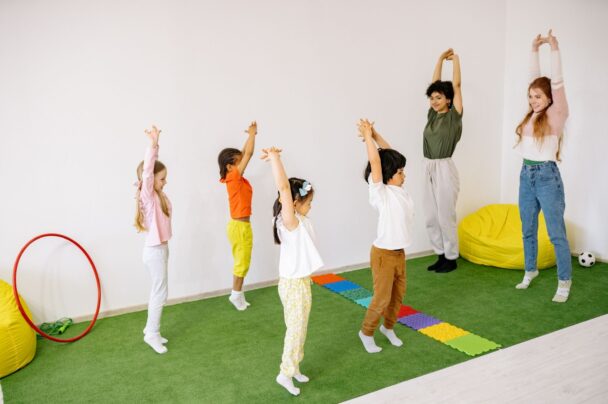
Physical Education (PE) can play a powerful role in inclusive education.
In fact, it offers students the opportunity to move, interact, cooperate with each others and build confidence in everyday educational activities.
Furthermore, for students with special educational needs (SEN), PE can support motor development, active participation, and general well-being in the educational settings, while helping the whole class develop empathy, respect, and collaboration.
However, all of it brings a great deal of responsibility for educators who work in this delicate field.
This course is designed for Kindergarten, Primary, PE teachers, and special education professionals involved in inclusive classrooms where students with SEN take part in physical activities.
It will focus on how to plan and adapt PE lessons so that all students can participate meaningfully, while receiving in the process all the support they might need.
Throughout the course, participants will explore how movement and exercise directly affect children’s physical, emotional, and social development, with particular attention to students with SEN.
Educators will also be guided through the main types of developmental difficulties they may encounter in school contexts, examining at the same time which activities, routines, and teaching strategies can best support each of their learners.
Participants will then be invited to reflect on how to select suitable activities, adapt equipment and instructions, and create lesson structures and tools that allow even SEN students to take part in PE safely and in an active way.
Also, the course intends to highlight the importance of recognizing special needs students’ special talents, using them as a source of motivation to build confidence and engagement.
In addition, a particular focus will be on training the participants in managing inclusive physical education lessons in a calm and effective way, by exploring strategies to remain focused even in challenging and stressful situations, balancing the needs of the whole group, and creating a positive classroom climate.
By the end of the course, participants will have developed practical strategies for planning inclusive PE lessons, supporting students with SEN through movement and physical activity, and creating learning environments where all students can participate, develop, and succeed.
What is included
Learning outcomes
The course will help participants to:
- Select and adapt physical activities for inclusive PE lessons to involve students with SEN;
- Plan PE lessons that support the participation of all learners in an inclusive classroom;
- Understand the role of movement and physical activity in the development of children with special educational needs (SEN);
- Identify appropriate activities and teaching strategies for different developmental needs and disabilities;
- Create PE learning environments that support cooperation, motivation, and meaningful participation;
- Apply practical strategies to remain calm and manage stressful situations during inclusive PE lessons.
Tentative schedule
Day 1 – Introduction to the course
- Introduction to the course, the school, and the external week activities.
- Icebreaker activities.
- Presentations of the participants’ schools.
Types of special educational needs
- Overview of special educational needs in school settings;
- Learning and developmental disabilities;
- Physical and sensory disabilities;
- Speech, language, and communication needs;
- Mental health and emotional needs.
Day 2 – Adaptive physical education: needs, development, and appropriate exercise selection
- The role of movement and physical activity in child development;
- Why is physical activity especially important for children with SEN?;
- Understanding the connection between specific needs and physical development;
- Selecting suitable activities for different developmental needs and disabilities;
- Reflecting on which activities are supportive, appropriate, and necessary in inclusive PE.
Day 3 – Inclusive physical education and teaching strategies
- How to include children with special needs in PE classes?;
- What methods should be used in an inclusive classroom?;
- Supporting diverse abilities within the same group;
- Practical work: inclusive games and adapted PE activities;
- Reflection on participation, motivation, and classroom management.
Day 4 – Ability-centered inclusion in physical education
- Special needs – “problem” or ability: moving from a deficit-based to a strength-based perspective;
- Recognising students’ talents and using them as a source of motivation;
- Adapting materials and tasks to support participation;
- Visit to an institution working with students with SEN;
- Reflection on inclusive practice in real educational contexts.
Day 5 – Mindfulness and emotional regulation through movement
- Movement-based, mindfulness, and dance activities to promote calmness and self-regulation;
- Strategies for encouraging respectful behavior and emotional balance;
- Techniques for teachers: staying calm in stressful situations;
- Practical individual and team activities;
- Final reflection on application in participants’ own contexts;
- Course evaluation: round-up of acquired competencies, feedback, and discussion;
- Awarding of the course Certificate of Attendance.
Day 6 – Structured cultural activities
- Structured cultural activity(ies) according to the hosting location;
- Learning journal: individual written reflection on the course experience;
- Course reflection: self-reflection and review of course materials and resources.
This course involves physical activity.
Comfortable clothing and shoes are recommended.
Download or share
Add to favouritesGet weekly recaps on confirmed sessions!